The best preparation starts before moving the machine
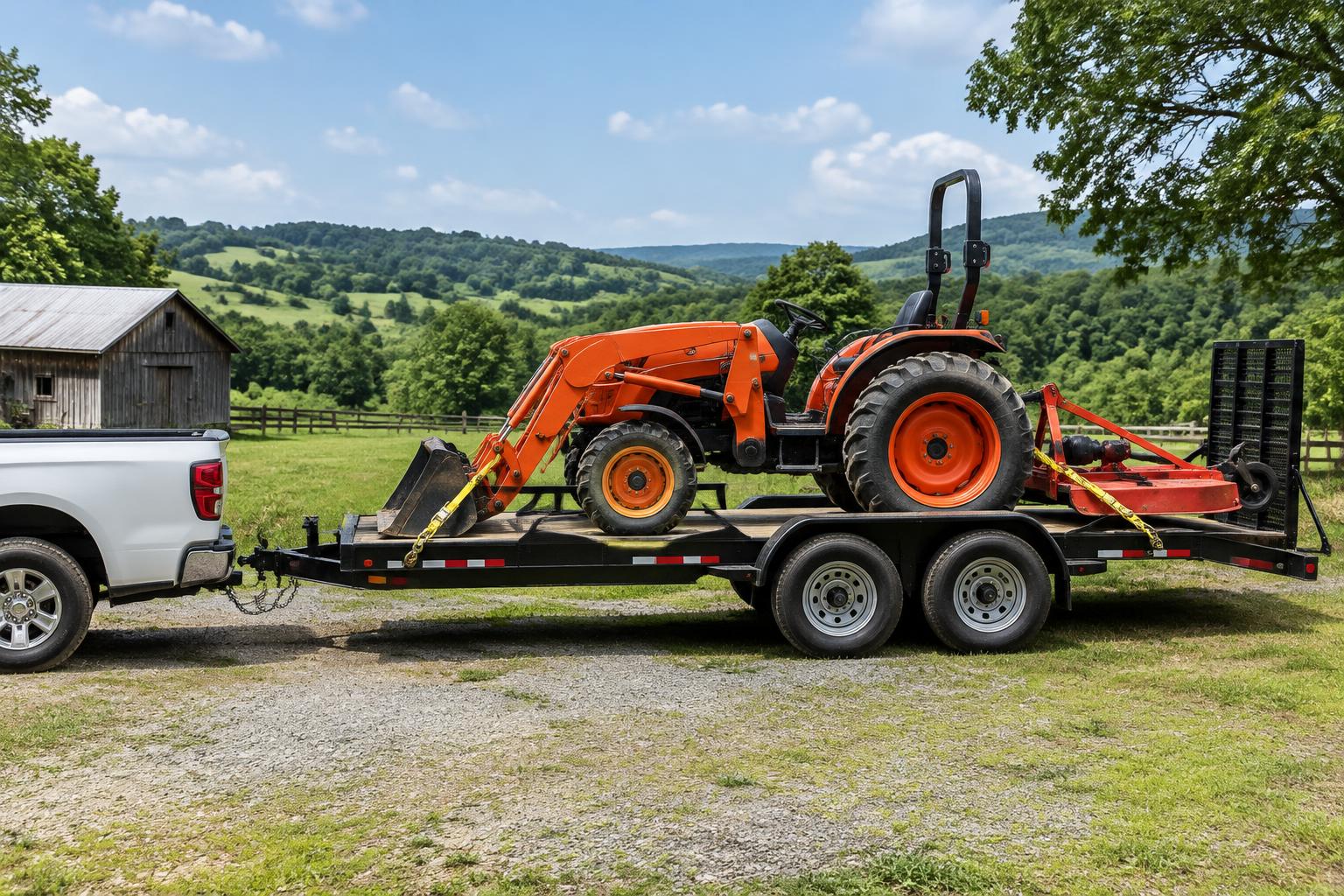
A tractor or zero-turn mower is not just a heavy object. It has a shape, ground clearance, attachments and a particular operating condition. Before a move across Coffee County, gather those details rather than driving it to a roadside location on the assumption that loading will be easier there. Tell Carl where it sits and where it is going. Mention whether the ground is firm and whether there is space to approach. A hauling plan is built around the actual machine and property, not around a guessed description such as “a small tractor.”
Measure the whole transport shape
Record length, width and height in the configuration intended for transport. Include the mower deck, bucket, rollover structure and other parts that extend beyond the main body. Use documented weight when available; attachments can change it. Check the manufacturer’s information rather than estimating by appearance. If measurements are difficult to obtain safely, explain that and send clear photos. Do not fold or lower parts merely to achieve a smaller measurement without knowing the correct procedure. The transport configuration should follow the machine’s instructions and the agreed plan.
Make an attachment list
A bucket, rotary cutter, blade or loose implement can change both the load and the space needed. Say what remains attached and what travels separately. Identify loose pins, tools, ramps and accessories that could shift. Ask how detachable pieces should be prepared and who is responsible for any removal. Use the manufacturer’s instructions for moving, securing or disconnecting attachments. A clear inventory prevents the conversation from overlooking extra items that add weight, dimensions or handling needs.
Explain how the equipment operates now
Tell Carl if the machine runs, drives, steers and brakes normally. Mention flat tires, a seized wheel, disconnected controls or a dead battery. Non-running equipment does not automatically rule out a discussion, but it changes loading considerations. Do not tow or push it with another machine unless you understand the manufacturer’s approved procedure and can do it safely. If the machine has been parked in a barn or field for a long time, describe the surroundings. Honest information about condition is more useful than trying to make it move just before pickup.
Check the property entrance
A narrow gate, low branch, soft driveway or steep transition matters to the hauling vehicle as well as the equipment. Send a photo of the approach, not only the machine. Mention where a trailer can stop and whether there is room to turn. Keep children, pets and unrelated activity away from the agreed loading area. Do not relocate equipment onto a slope or unstable surface to clear a driveway. At a Manchester property or a rural Coffee County destination, access can vary considerably even when both places are close to a main road.
Read the transport instructions
Look for the manufacturer’s guidance on parking, attachments, fuel, batteries and approved tie-down points. Do not improvise securement with whichever part is easiest to reach. Fuel handling in particular should follow an appropriate safe procedure. Remove personal items and loose objects as directed. If a repair shop is receiving the machine, tell it the condition and verify access. Keep a receiving contact available so the driver is not left guessing where an attachment or machine should be unloaded.
Do not assume a familiar machine has familiar controls
A tractor or mower may use a transport mode, brake release or attachment position that someone unfamiliar with that model will not know. Keep the correct operating information available and explain any damaged or modified controls. If a key, switch or release is missing, mention it before pickup. Do not ask someone to experiment with the machine to discover how it works. A safe loading conversation benefits from knowing what the manufacturer requires and what the machine can currently do. Where the procedure is uncertain, consult the manual or a qualified service provider before attempting it.
Make a receiving checklist as well
At the destination, identify where the equipment is intended to sit, who opens the entrance and who can answer questions about unloading. If it is headed to a shop, confirm that the shop expects the machine and any separate attachments. Keep the receiving contact available during the arranged move. Clear the intended area without creating a new hazard, and do not assume unloading on soft ground is acceptable just because it is convenient. Preparing both properties helps prevent a well-planned pickup from ending with an unclear delivery, especially when the owner cannot be at both places.
Confirm the whole move with Carl
Call or text DCR about equipment hauling with the pickup location, destination, measurements and condition. For Manchester and other Coffee County moves, include any entrance restrictions and your preferred timing. Ask about availability and whether the equipment fits the proposed setup before assuming a pickup. Keep the keys and any operating instructions accessible.
Discuss your next move
Call or text Carl with the details and he’ll tell you straight what it takes. If anyone is in danger on the road, call 911 first.
Call (931) 308-9747